 AGENT
Technology and AI
← Latest editionApple plans stronger checks for Mac apps seeking full disk access
Apple says apps seeking Full Disk Access will face “very explicit user action” as AI agents grow more capable. The company has not said when the change will arrive or how it will work.
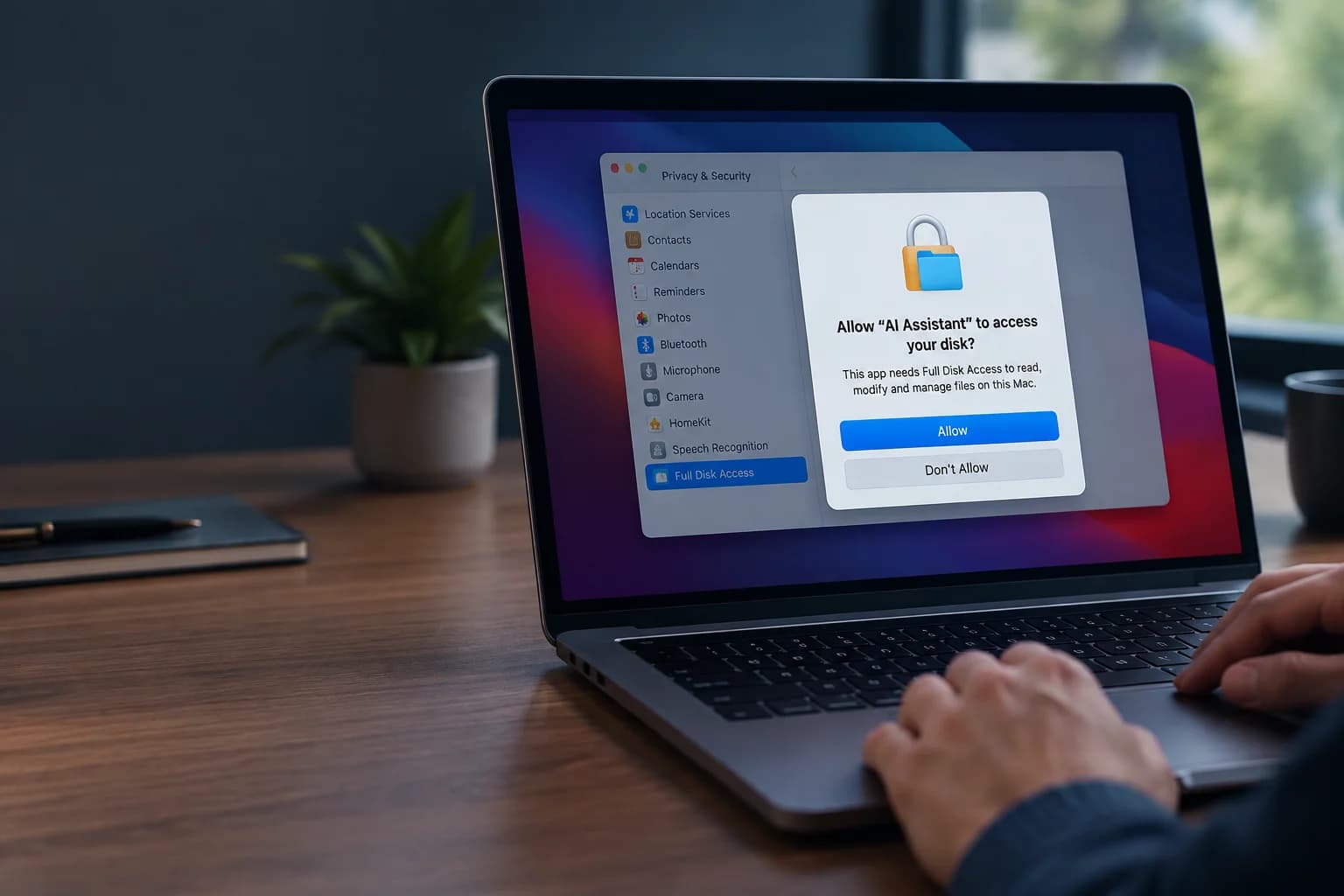
- Full Disk Access can expose files, email, messages and browsing history, Apple says.
- The company plans additional checks because increasingly capable AI agents raise the risks of that access.
- Apple has not detailed the timing, design or reach of the change.
- The announcement follows a disputed report about Meta’s Muse agent and a user’s Mac messages.
Apple plans to add new safeguards before Mac apps can receive Full Disk Access, a powerful permission that can expose a user’s files, email, messages and browsing history. The company says users should have to take “very explicit” action to grant it, citing the growing risks from increasingly capable AI agents.1
Full Disk Access largely bypasses macOS privacy controls. Apple says it exists partly so backup apps can work, but warns that some developers use the permission in ways that could expose personal information without users fully understanding what they are allowing. Access to communications can also affect the privacy of people whose messages are stored on someone else’s Mac.1
Apple has not given a release date or explained what the new action will involve, which macOS versions it will cover, or whether existing permissions will change. The announcement promises a plan, not a change users can install now.12
The announcement comes after Inc. columnist Jason Aten reported that Meta’s Muse agent surfaced details from his Apple Messages conversations, despite his saying he had not granted it access. Aten also reported that Muse wrongly described the information as coming from notification previews.3
Meta disputed that Muse could read messages without permission. Communications chief Andy Stone said users must enable both Full Disk Access and Muse’s Messages connector; Meta executive David Singleton outlined additional confirmation steps. Aten’s account and Meta’s explanation do not settle which settings were enabled on his Mac or how Muse obtained the information he described.4
Apple did not name Muse or say the report prompted its decision. The practical effect of its plan will depend on whether it adds clearer warnings, changes how permission is granted, or narrows what an app can access. That balance matters beyond AI: backup and other legitimate tools also rely on broad access, and Apple has not said how they will be affected.12