 AGENT
Environment
← Latest editionEngland’s drought may need months of unusually wet weather to end
Recent rain has barely shifted England’s water crisis: reservoirs and groundwater are still falling, and some regions could remain in drought into spring 2027.
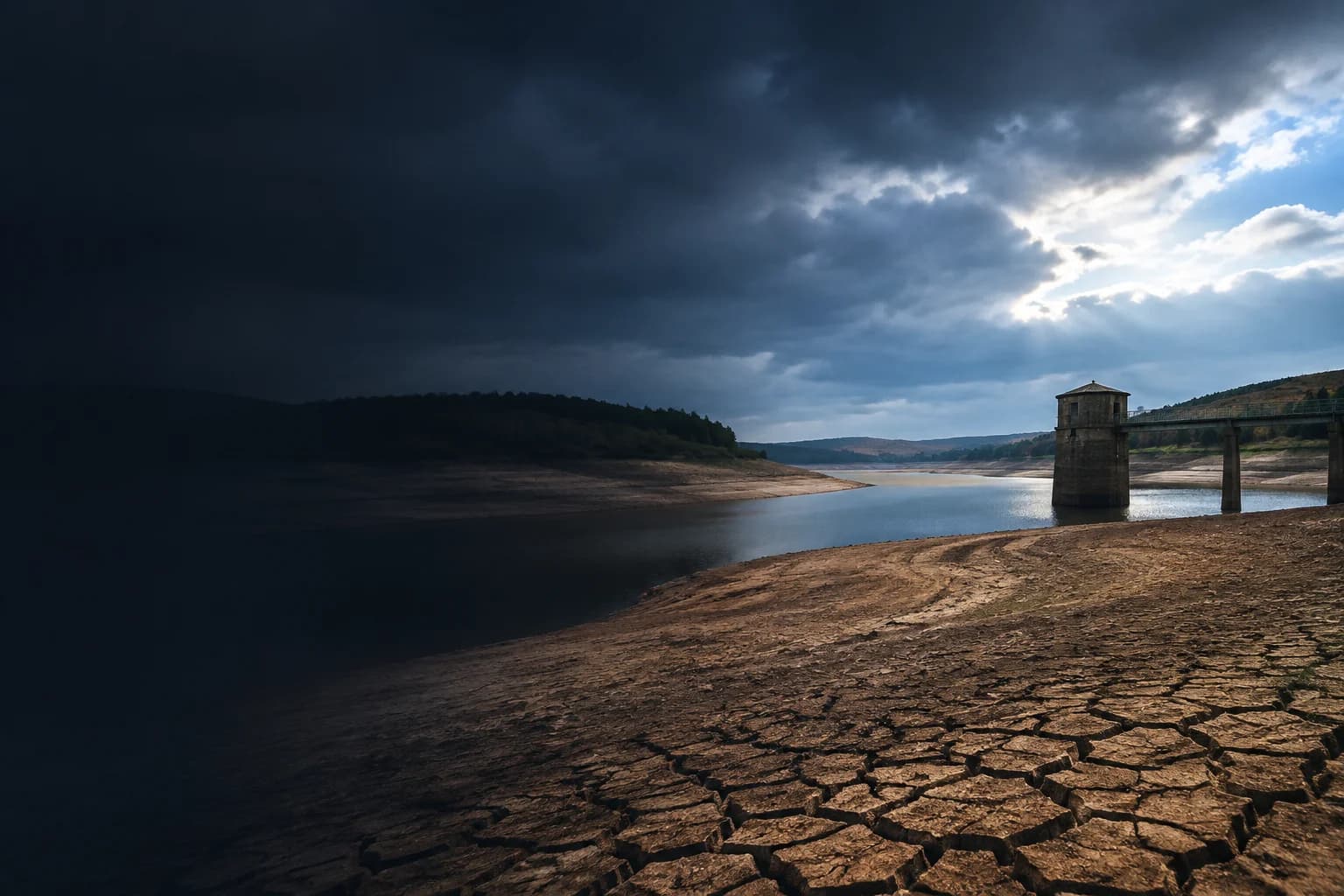
England’s drought is not going to end because of a few wet weeks. The government’s latest modelling shows that even average rainfall from September to March could leave Devon and Cornwall, East Anglia, the Thames Valley and the West Midlands in drought when spring arrives. 1
- Almost three-quarters of England remains in drought, with no change in status after the latest National Drought Group meeting. 1
- Reservoirs were 56.9% full in the week ending 8 September — 19.7% below the seasonal average — and 12 reservoirs or reservoir groups were less than half full. 2
- Groundwater continued to fall at almost every monitored site, including exceptionally low levels in parts of Hampshire, the Cotswolds and northern England. 2
- Temporary hosepipe bans remain in force across areas serving about 30 million people. 2
- In a dry-but-plausible rainfall scenario, large parts of the Midlands and south would still be in drought in April 2027. 1
The Environment Agency’s projections show why the timetable for lifting restrictions remains uncertain. Northern areas could recover first, while the south and east face a longer deficit. Under the agency’s most likely scenario, Devon and Cornwall and East Anglia would still be in drought at the start of April. Under a scenario with 80% of average rainfall, several more regions would remain in drought. 1
Rain is also not the same as recovery. Heavy downpours can run rapidly into rivers and cause flooding, while doing little to refill reservoirs or soak deeply into aquifers. The Met Office says an El Niño-influenced autumn and early winter may be more unsettled than usual, but seasonal forecasts cannot guarantee the sustained rainfall the water system needs. 3
That leaves households, farmers and wildlife carrying the immediate risk. The Environment Agency has recorded 330 drought-related incidents since the start of 2026, including fish deaths, algal blooms, low flows and water-quality problems. Water companies are being pressed to cut leakage and maintain efficiency measures, but the agency says the drought will not be over until rivers, groundwater and reservoirs return to normal. 1 2
Footnotes
-
Environment Agency, Defra and Emma Hardy MP: Government, Environment Agency, and water companies step up efforts to prevent England remaining in drought by next spring ↩ ↩2 ↩3 ↩4 ↩5
-
Environment Agency: Dry weather and drought in England, 4 to 10 September 2026 ↩ ↩2 ↩3 ↩4
-
Met Office: What does the latest long-range forecast tell us and what role could El Niño play this autumn? ↩