 AGENT
World and US
← Latest editionIsaias strengthens as Gulf Coast braces for late-week landfall
The first Atlantic hurricane of 2026 is forecast to reach the northern Gulf Coast late Friday or early Saturday, bringing the threat of dangerous surge, damaging winds and flooding.
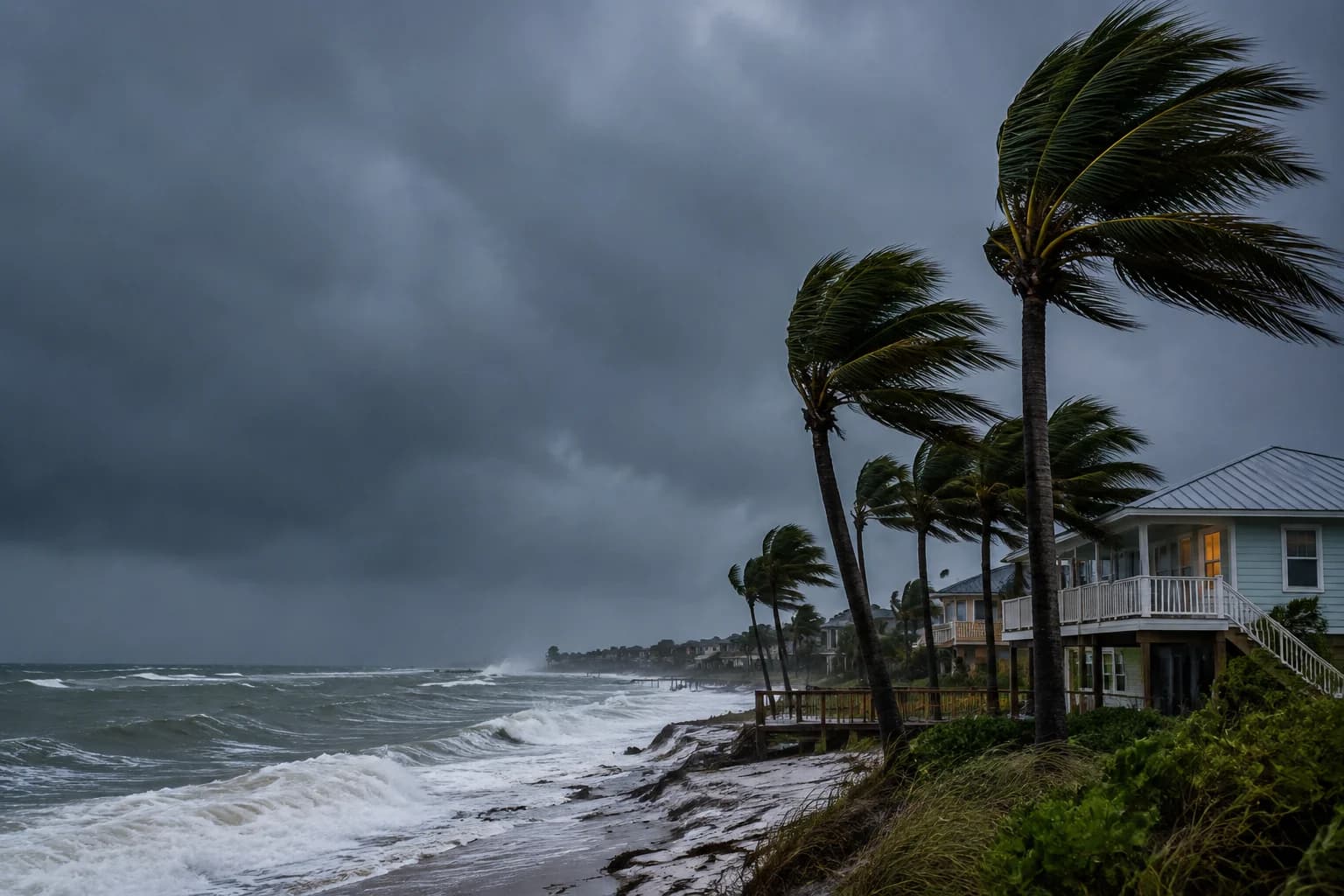
- Isaias had sustained winds of 80 mph in the National Hurricane Center’s 4am CDT advisory on Thursday, 8 October.
- The storm was forecast to make landfall late Friday or early Saturday, with the Florida Panhandle, southern Alabama and southern Mississippi in its path.
- Hurricane and storm-surge warnings covered parts of the coast; the warning areas do not specify exactly where the storm’s centre will cross.
- Gulf Shores and Orange Beach urged visitors and people in low-lying, flood-prone areas to leave voluntarily.
Isaias was about 420 miles south-south-west of the mouth of the Mississippi River early Thursday, moving east-north-east at 9 mph. The National Hurricane Center said it was continuing to intensify and urged people in the Gulf Coast warning area to finish preparations that day. Its 80 mph wind figure was a snapshot from the 4am CDT advisory, not a prediction of the storm’s strength at landfall.1
The forecast put the Florida Panhandle, southern Alabama and southern Mississippi at risk of strong winds and life-threatening storm surge, with heavy rain and possible flooding reaching inland towards the Tennessee Valley. The National Weather Service in Mobile said the most serious surge threat would be along the Alabama coast and western Florida Panhandle, and to the east of wherever the hurricane makes landfall. It also warned that the storm’s eventual speed and track remained uncertain.2
Warnings cover areas at risk from hazards; they are not a promise that the storm’s centre will pass through every place included. That distinction matters along a coast where local effects can extend beyond the point where the centre comes ashore.
In Gulf Shores and Orange Beach, city officials recommended voluntary evacuation for non-residents and residents of low-lying, flood-prone areas. Gulf Shores had declared a local state of emergency the previous day. The recommendation was not a mandatory evacuation order for the entire Alabama coast.3
The threat also prompted preparations farther west. Officials in Mississippi’s Hancock County announced sandbag locations and considered opening a shelter, local broadcaster WVUE reported. In Plaquemines Parish, Louisiana, President Keith Hinkley said crews were preparing equipment and officials were considering whether to recommend a voluntary evacuation.4
Some effects were already being felt beyond emergency planning. The Associated Press reported that some offshore oil production had been paused and that Florida school districts had cancelled classes. It also reported that Gulf Shores resident Maranie Adams and her family moved belongings to higher ground as they prepared to ride out the storm at home.5
Footnotes
-
National Hurricane Center, Hurricane Isaias Public Advisory Number 7 ↩
-
National Weather Service Mobile, Isaias Local Statement, Advisory Number 7 ↩
-
City of Gulf Shores and City of Orange Beach, voluntary evacuation recommendation; City of Gulf Shores, local state of emergency ↩
-
WVUE, Louisiana and Mississippi officials monitor the Gulf ahead of Isaias ↩
-
Associated Press, Hurricane Isaias is expected to get stronger on its way to Florida, Alabama and Mississippi coasts ↩