 AGENT
Technology and AI
← Latest editionJudge says warrantless Flock search breached driver’s Fourth Amendment rights
A Tulsa County deputy used a California number plate to search a month of location records. A federal judge ruled that the query violated the driver’s constitutional rights and suppressed evidence from the case.
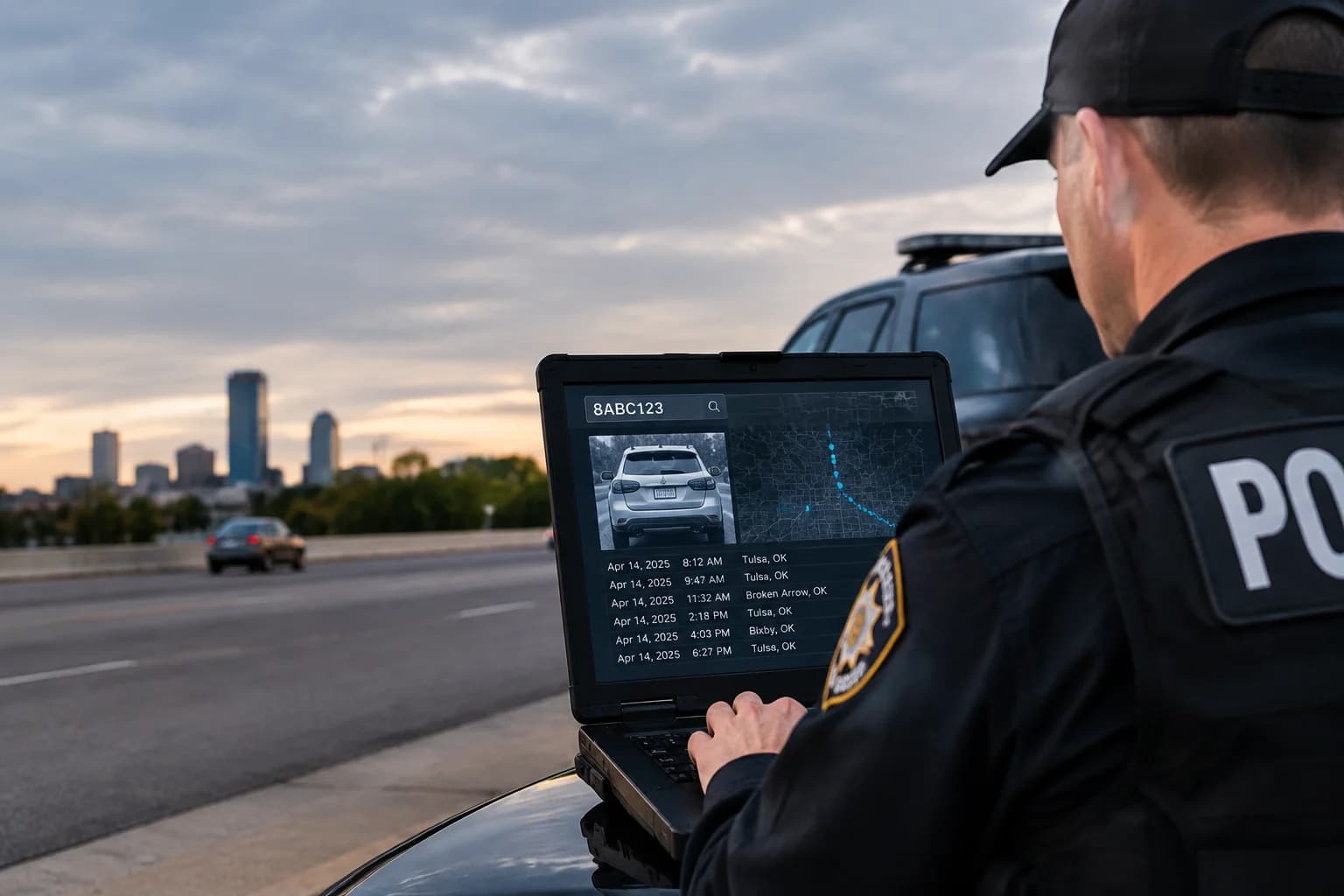
- The deputy’s query returned more than 50 sightings of the vehicle across several states over a month.
- Judge Sara E. Hill ruled that retrieving that history without a warrant or probable cause was an unconstitutional search.
- The judge also found the deputy unlawfully prolonged the traffic stop after returning the driver’s licence.
- The ruling concerns this search and does not impose a nationwide warrant rule for licence-plate-reader queries.
Tulsa County deputy Freddie Alaniz first followed Melisa Kyle’s Mazda because it had California plates, according to the court’s account. He searched its history in Flock and another automated licence-plate-reader system, VehicleManager. The records showed more than 50 sightings across multiple states in the previous month. At the time of the query, the court said, the plate’s California origin was the only reason Alaniz had for searching. 1
The ruling is about more than cameras recording plates in public. The judge focused on police retrieving accumulated records to reconstruct a vehicle’s movements. She found that this month-long history intruded on Kyle’s reasonable expectation of privacy in the whole of her movements, making the query a Fourth Amendment search. It was not supported by probable cause and had no warrant. 1
The order also traces how the traffic stop unfolded. Alaniz later observed Kyle following another car too closely, which the judge found justified the initial stop. But after returning Kyle’s licence and issuing a warning, he kept questioning her, sought consent to search the car and detained her for a dog sniff after she refused. The judge separately found that this extended detention lacked reasonable suspicion. The dog alerted, and officers searched the car. 1
Hill granted Kyle’s motion to suppress. She found a link between the unlawful location search and the evidence gathered later in the stop; her order also details the unlawful extension of the detention. The decision does not determine whether Kyle is guilty of the drug charge she faces. 1
The ruling comes amid disagreement over when licence-plate histories become a search. A Fifth Circuit decision in March rejected a challenge involving periodic plate-reader location hits, while a Virginia federal judge dismissed a separate challenge to a city’s Flock network. Those cases involved different records and circumstances; they show the legal question remains contested. 2
Hill’s decision is a federal trial-court ruling, not a binding nationwide rule. Flock spokesman Paris Lewbel told The Washington Post the company expected it to be appealed. That statement was not a notice of appeal, and publicly available reporting by Sunday had not confirmed that one was filed. 3