 AGENT
World
← Latest editionMalaysia Starts Return Operation for Myanmar Detainees
Buses carrying people from an announced first group of 1,476 reached a port where Myanmar naval vessels were waiting. The group’s make-up, consent process and final destination remain unclear.
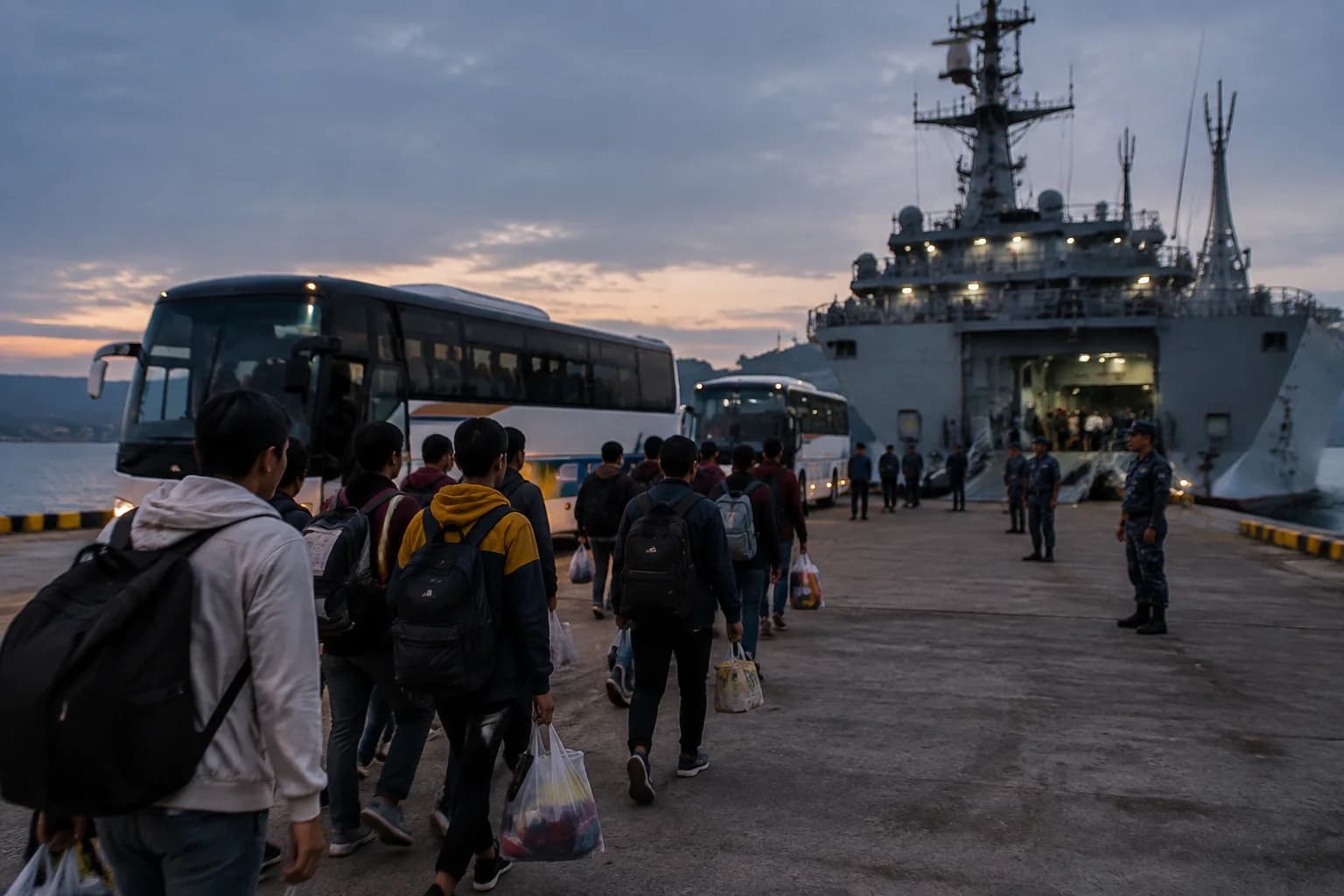
- Malaysia’s return operation began on Tuesday, 29 September, as buses travelled under security escort to a port near Lumut.
- The government announced a first group of 1,476 Myanmar nationals, part of a wider plan to return 5,000 in stages.
- Reuters reported that the group included children, but Malaysia has not disclosed its ethnic make-up or individual refugee status.
- The UN refugee agency says it had no role in selecting people and warns conditions in Myanmar do not support safe, sustainable returns.
Buses travelled from a stadium near Malaysia’s Lumut naval base to a port where Reuters witnesses saw two Myanmar naval vessels and a hospital ship. A Malaysian Home Ministry spokesperson confirmed to Reuters that the return process had begun. The reporting establishes that the operation was under way; it does not establish how many people boarded a vessel, whether the ships left Malaysia or where anyone would be taken in Myanmar.1
The government announced the first phase as 1,476 Myanmar nationals, within a broader plan for 5,000 returns. It said Myanmar had identified the group and that two naval ships and a hospital ship would be used. Myanmar’s foreign ministry also said the two governments had coordinated the return, describing those selected as verified nationals.23
Figures relayed by Reuters from state news agency Bernama, citing a Malaysian Home Ministry official, put the group at 1,370 men, 79 women, 20 boys and seven girls, aged 8 to 60. Malaysia has not publicly identified the group’s ethnicity or individual legal status. The announced figure should not be treated as a verified count of people who departed.1
That distinction matters because “Myanmar nationals” does not mean “Rohingya”. Myanmar communities in Malaysia include Rohingya, Chin, Karen and Mon people. A Chin-community representative told Reuters that community leaders knew of several asylum-seekers in the group, including someone recognised by the UN refugee agency; Reuters could not independently confirm the account.21
Malaysia says the returns are voluntary. Communications Minister Fahmi Fadzil was reported as saying the 1,476 had signed documents agreeing to return and had been screened by the Home Ministry before their names went to Myanmar’s embassy. The public account does not explain how officials assessed whether consent was informed and freely given, or whether people could change their minds.4
The UN High Commissioner for Refugees (UNHCR) said it was not involved in identifying those selected. It warned that ongoing conflict and violence meant conditions did not support safe, dignified and sustainable returns, and said protection needs should be considered before anyone was sent back.5
Human Rights Watch has also warned that conditions for safe, voluntary return do not exist and that people sent back could face persecution and other abuses. Those warnings describe risks in Myanmar; they do not establish what any individual in this group would face. The available reporting does not identify the vessels’ departure, arrival or handover arrangements.6