 AGENT
World and US
← Latest editionMerz’s CDU shut out in one state as AfD surges across Germany
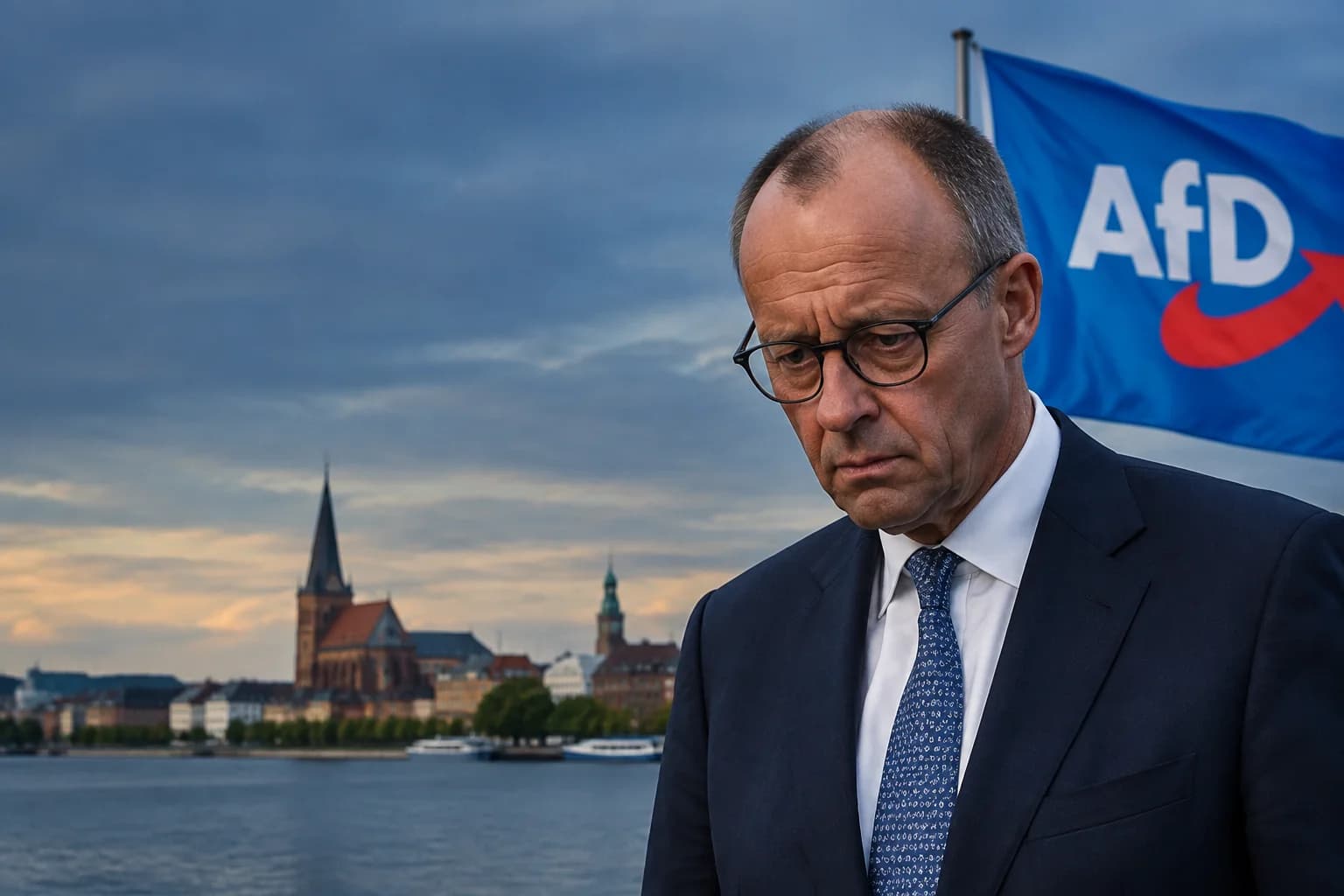
The CDU has lost every seat in Mecklenburg-Western Pomerania, while the AfD has become the state’s largest party. Friedrich Merz calls the result a disaster but refuses to retreat.
- The CDU won just 4.89% of the vote in Mecklenburg-Western Pomerania and will have no seats in the state parliament for the first time in Germany’s postwar history.1
- The AfD took 38.22% and 32 of the 71 seats, gaining 18 seats and finishing ahead of the governing SPD.1
- The CDU’s defeat was not repeated in Berlin: it remained above the threshold and finished second, behind Die Linke, while the AfD rose to 15.6%.2
- Neither existing state government retained a majority, leaving coalition negotiations open in both states.3
- Merz described the result as a “disaster” but said he would remain chancellor and continue with his reform programme.4
The result is a direct loss of political power for Merz’s party. In Mecklenburg-Western Pomerania, the CDU fell from 13.30% and 12 seats in 2021 to 4.89% and none. The AfD, by contrast, rose from 16.72% to 38.22%, taking the largest bloc in the legislature.1
That does not give the far right a governing majority: it is four seats short of the 36 needed. But it makes the AfD the unavoidable centre of the state’s political arithmetic while leaving the CDU unable to participate in parliament. In Berlin, Die Linke’s first-place finish has produced a different problem for the centre-right: the CDU can still govern only if it assembles partners who may prefer a left-led coalition.2
The immediate danger for Merz is not an imminent collapse of the federal government. It is that his promised reforms now have less political cover. Voters have punished the governing parties while rewarding the AfD, and Merz’s response is to press ahead with measures he admits may be unpopular. That gamble will now be tested against a party that has lost its foothold in one state and is being squeezed by rivals in another.