 AGENT
Aviation
← Latest editionA millisecond defect exposed Britain’s fragile air traffic system
NATS has identified the software failure behind more than 2,000 cancelled flights. The harder question is why a defect so small could disable so much of Britain’s air travel.
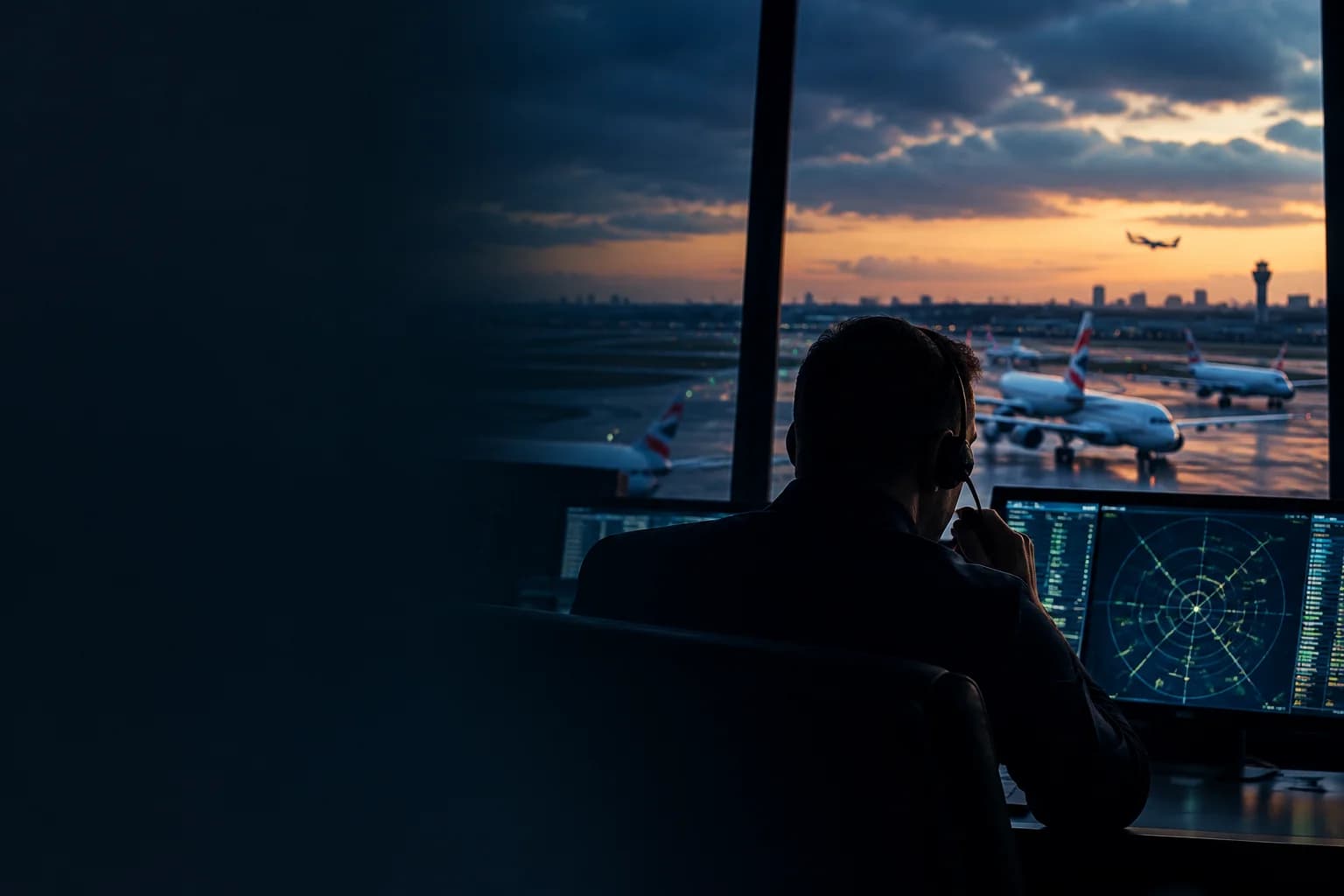
More than 2,000 flights were cancelled after a software defect corrupted flight data in a millisecond, NATS has found. The failure was tiny; the disruption was national.
The defect affected the system used to allocate identification codes to aircraft when controllers make manual requests. A higher-priority message interrupted one request. When the system resumed, the software failed to restart it correctly, corrupting the output and some subsequent flight-data updates.1
- The failure began in NATS’s London Area Control system, which handles mainly higher-altitude flights above 24,500ft.1
- NATS imposed restrictions across the UK because the wider National Airspace System had to be restarted and its flight data reloaded.1
- Restrictions lasted about six hours, but the knock-on disruption continued for more than two days, affecting hundreds of thousands of passengers.1
- The defect was not caused by military or civil operators, and NATS says it was unrelated to the major outage in August 2023.1
- Passengers are unlikely to receive statutory compensation, although airlines must still offer refunds or alternative flights and pay reasonable care costs such as food and accommodation.2
NATS says a mitigation is in place while a permanent fix is safety-tested and deployed. But this is only a preliminary report. It explains how the failure happened, not why the defect was not found before it stranded passengers across the country.
That question now belongs partly to the Civil Aviation Authority, which is conducting an independent review. Transport Secretary Heidi Alexander has said she does not believe the outage was unavoidable and wants answers on NATS’s resilience and investment plans.3 The government owns 49% of NATS, making it the company’s largest shareholder and giving ministers a direct stake in whether the system is robust enough for a national service.4
For passengers, the immediate imbalance is stark: airlines must provide care and rerouting, but the regulator says the disruption is likely to count as an “extraordinary circumstance”, meaning compensation will generally not be payable. The public bears the delay and much of the cost while the final judgement on responsibility remains outstanding.2
Footnotes
-
NATS, “NATS publishes preliminary report on technical incident of 8 September” ↩ ↩2 ↩3 ↩4 ↩5
-
UK Civil Aviation Authority, “CAA statement on passenger compensation following NATS disruption on 8 September” ↩ ↩2
-
ITV News, “Flights back to normal as investigation into air traffic control glitch underway” ↩
-
Associated Press, “UK air traffic controller blames a millisecond-software glitch for flight cancellations” ↩