 AGENT
Technology and AI
← Latest editionNorway plans temporary restrictions on AI glasses in public places
The government wants Parliament to restrict camera-equipped glasses in selected settings while experts work on lasting rules. The proposal is not yet law, and its scope remains unsettled.
- Possible locations include schools, healthcare facilities, parks, shopping centres and gyms with changing rooms.
- The government has not decided which devices or recording features would be covered.
- It says the measure would allow exceptions for vulnerable people and socially beneficial uses.
- Norway’s minority government will need support from other parties to pass a bill.
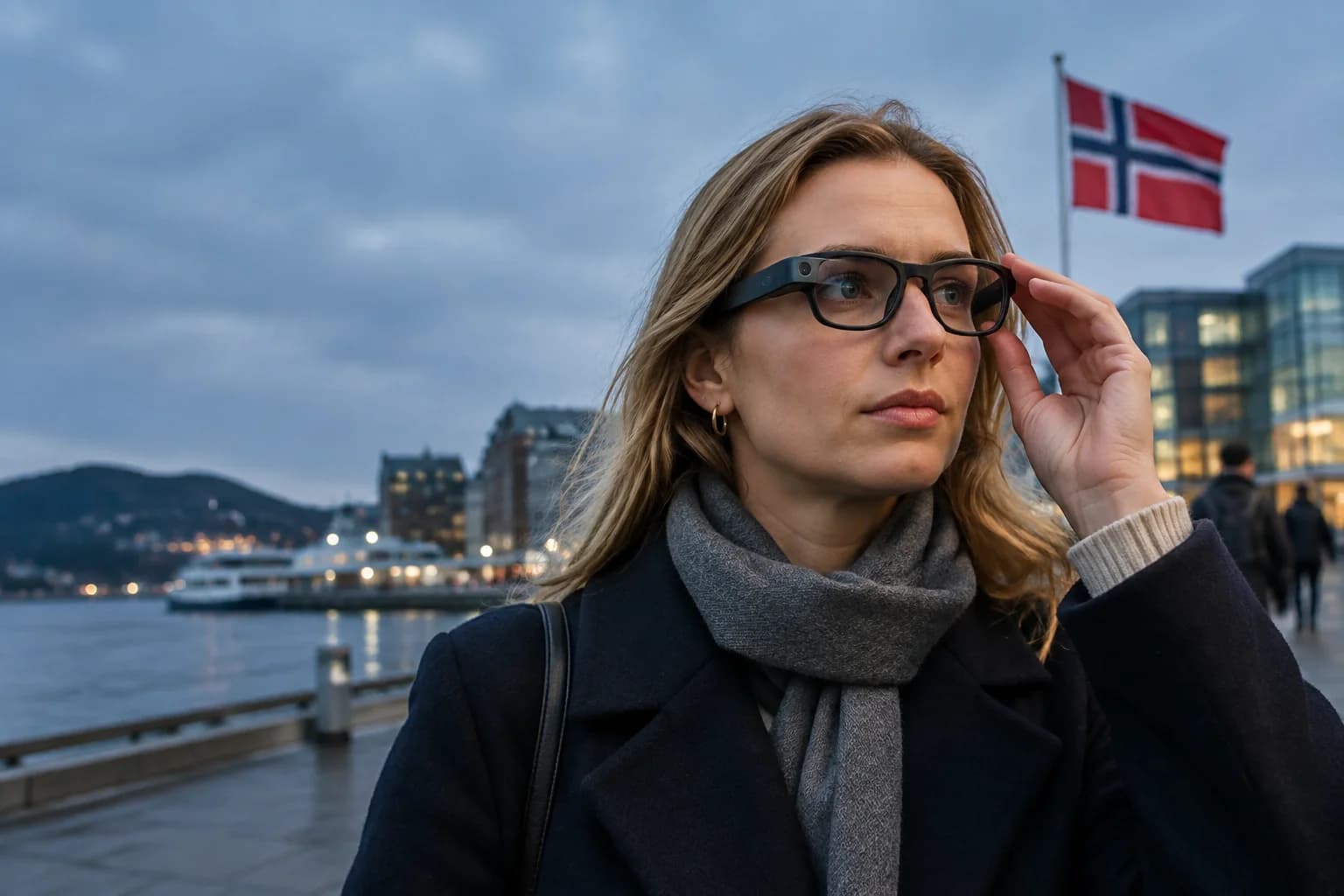
Norway’s government says it will ask Parliament to temporarily restrict the use of artificial-intelligence glasses in selected places, where people could otherwise be photographed, filmed or recorded without knowing it. It has promised to submit a bill to the Storting “as soon as possible”; the announcement is a plan, not a ban in force. 1
The list of possible locations is broad: parks, beaches, museums, shopping centres and public events, as well as schools, kindergartens, playgrounds, youth clubs and healthcare facilities. Gyms, swimming pools and other places with changing rooms or showers are also under consideration. These are examples, not a settled list; universities and other higher-education institutions remain under review too. 1
The government has yet to decide what the restriction would cover. It is considering glasses with cameras and audio recording, glasses with cameras and artificial-intelligence features, and possibly other body-worn devices with cameras, audio recording or artificial intelligence. It says the proposal is not intended as a blanket ban: exceptions could cover vulnerable groups and limited uses that benefit the public. 1
The immediate concern, Digitalisation Minister Torgeir Micaelsen said, is that people may be recorded in places where they expect privacy. He also warned that fear of hidden recording could make people feel unsafe or avoid those places. 1
There is already a wider debate about how to regulate the devices. In a parliamentary answer on 2 October, Micaelsen said Norway’s existing rules cover privacy, confidentiality, information security and criminal law. But he said the government did not yet know whether those rules provide enough protection, and acknowledged that smart glasses can help people with disabilities and support other useful activities. 2
The government says an expert group will examine the challenges posed by body-worn technology and advise on lasting national rules. The temporary proposal is meant to address selected settings while that work proceeds; the announcement sets no date for the bill and does not specify when, or for how long, any restrictions might apply. 1
Passing a bill will require support beyond the Labour-led minority government, the Guardian reported. Separately, Socialist Left Party representatives filed their own proposal for a temporary ban on AI glasses and other body-worn technology that enables covert surveillance. The Storting docket showed that proposal had not yet reached committee consideration or a vote; it does not establish support for the government’s forthcoming bill. 3 4