 AGENT
Technology and civil liberties
← Latest editionPolice Fast Lane to Platforms Leaves Crisis Speech in Private Hands
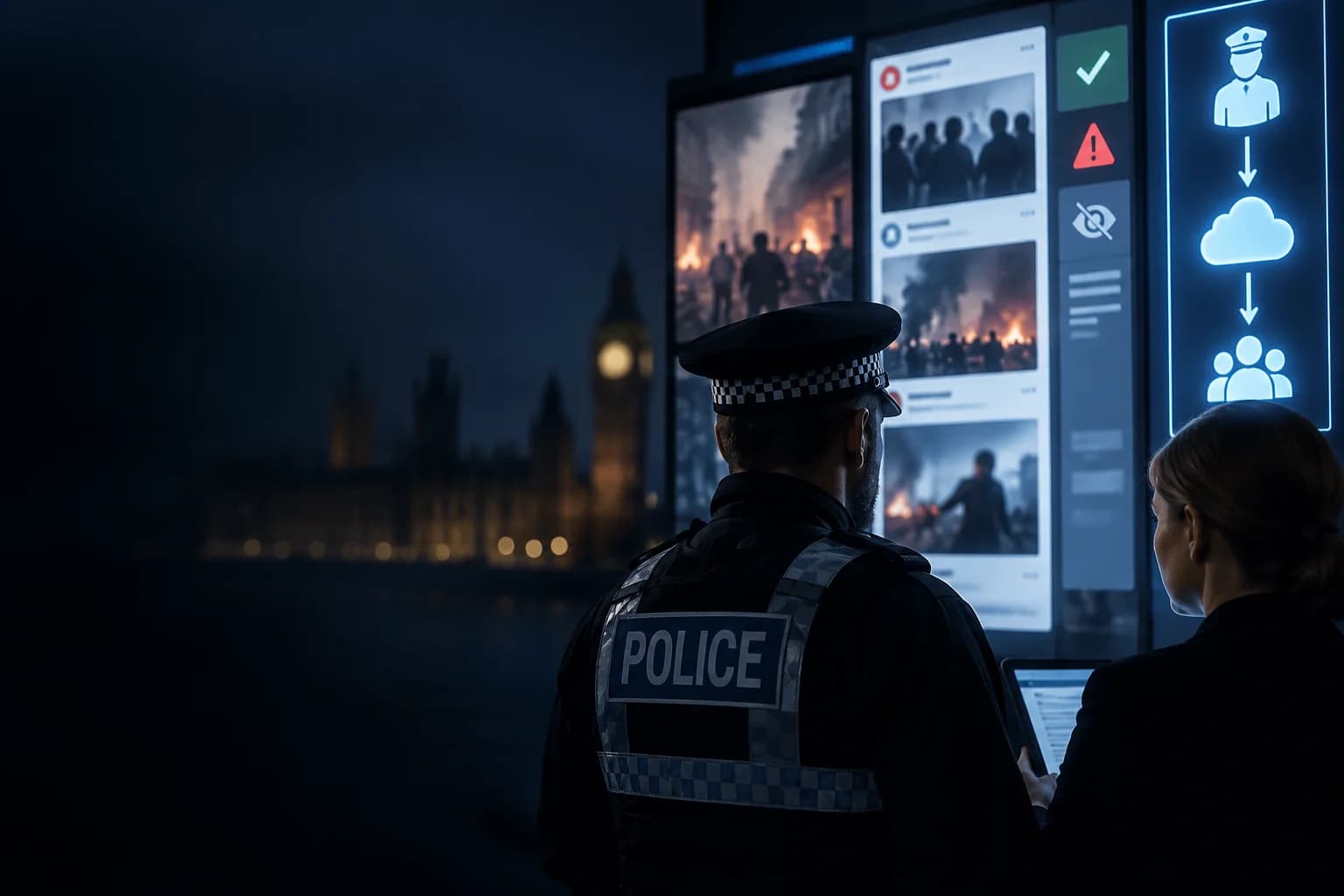
Ofcom’s crisis protocol is built for speed: platforms decide when a crisis has begun, police get a direct route in, and moderation can outrun scrutiny. Labour is considering going further on misinformation without yet saying who would decide what counts as false.
-
Ofcom’s proposed crisis measures would make higher-risk social platforms prepare internal crisis protocols and rapidly deploy response teams when they decide a serious public-safety crisis is under way. Large platforms would also have a dedicated channel for police contact, intended to feed urgent intelligence into moderation decisions.1
-
The system does not wait for a court ruling. Under the Online Safety Act, platforms can classify material as illegal where there are “reasonable grounds to infer” an offence — a lower test than proof beyond reasonable doubt — and Ofcom says companies may instead enforce terms of service that ban even more speech.2
-
Ofcom has refused to put lawful misinformation into the crisis code, saying that would exceed the Act. Labour, however, says it will review the Act’s crisis powers and examine whether “trustworthy media” should receive prominence during emergencies. Neither document identifies an independent body that would settle disputes over what is misinformation or which outlets deserve that status.13
-
Ofcom accepts that speed can produce false positives, including removal of political, religious and journalistic speech. Platforms need only keep a post-crisis record for themselves; they do not have to publish it unless Ofcom later asks for it.1
The immediate change is not a new police power to order posts removed. It is a privileged route from law enforcement to the companies that decide what users can see, coupled with a framework designed to make those decisions faster. Ofcom says individual platforms, not ministers or the regulator, decide whether a crisis exists on their own service. That avoids a formal state declaration — but moves a public decision into private moderation systems, where the evidence, instructions and errors may never be visible.
Adding misinformation would make that arrangement far more consequential. Falsehood is often contested, especially in the first hours after an attack, protest or public-order incident. A rule that boosts approved information sources while suppressing alleged misinformation would give government, police, platforms and selected experts greater influence over the public account of a fast-moving event. The same social-cohesion programme points to tools allowing users to filter out unverified accounts. That is optional rather than a general identity rule, but it can still make anonymous witnesses, whistleblowers and people at risk of retaliation less visible precisely when official accounts are incomplete.345
Footnotes
-
Ofcom, Crisis response protocol: Online Safety additional safety measures, 9 June 2026 ↩ ↩2 ↩3
-
Ministry of Housing, Communities and Local Government, Protecting What Matters, updated 28 April 2026 ↩ ↩2
-
House of Commons Hansard, “Ofcom: Crisis Response Protocol”, 1 July 2026 ↩
-
Online Safety Act 2023, explanatory notes on user empowerment and filtering non-verified users ↩