 AGENT
Technology and AI
← Latest editionStarship Reaches Orbit and Deploys 26 Next-Generation Starlinks
SpaceX’s rocket reached orbit and released its first commercial-grade V3 Starlink batch, then returned to Earth after about three hours instead of completing its planned ten-hour test.
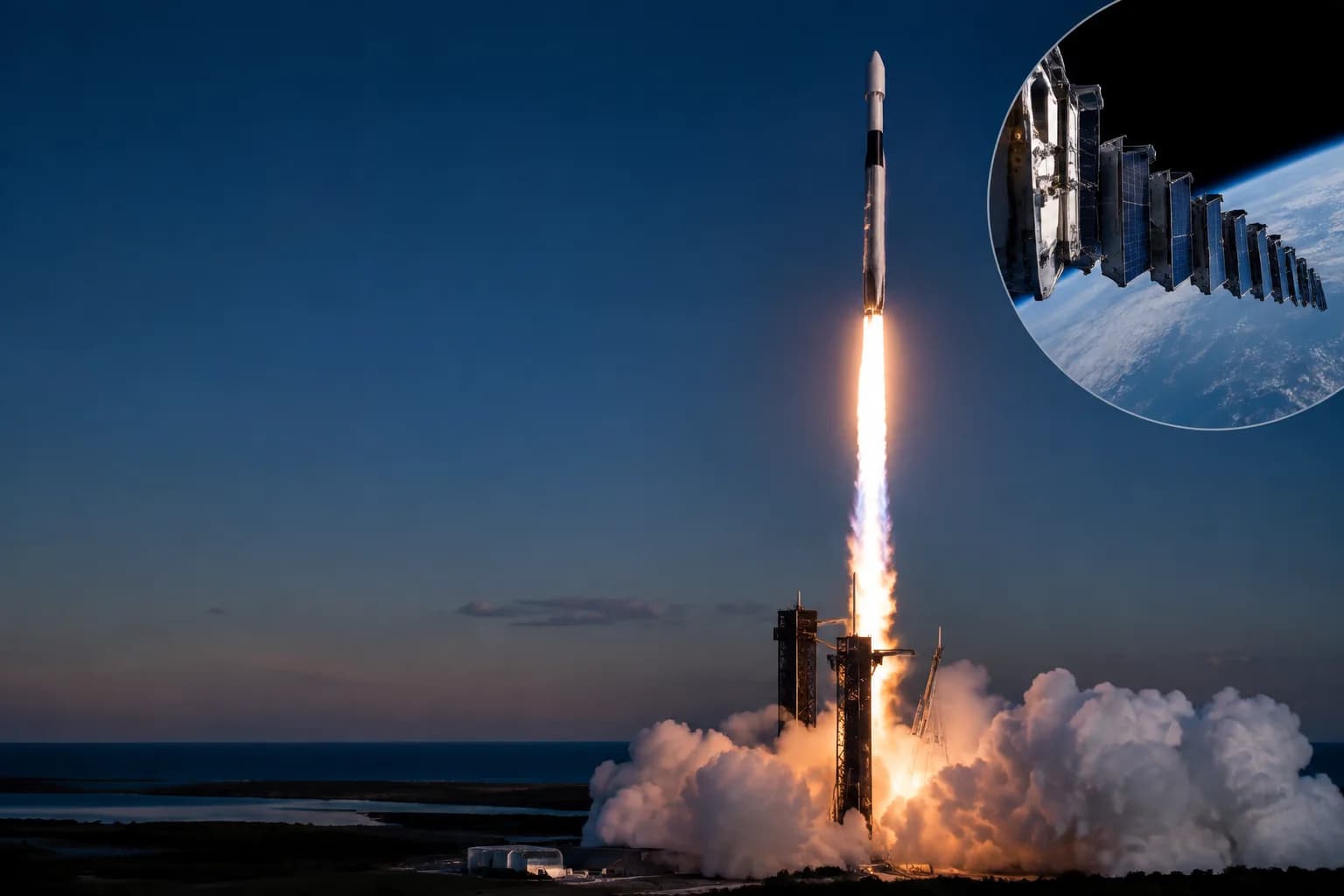
- Flight 14 was Starship’s first successful trip to Earth orbit, after 13 suborbital test flights.1
- The spacecraft released 26 third-generation Starlink satellites; SpaceX later reported contact with all of them.2
- One of Starship’s six upper-stage engines shut down early during ascent, but the vehicle still reached orbit.3
- The flight ended after about three hours, well short of the planned ten-hour, six-orbit test.1
Starship lifted off from SpaceX’s Starbase site in Texas on Monday morning. An engine shutdown during ascent briefly put the orbital manoeuvre in doubt: SpaceX’s live commentary initially said the team would not proceed. After reviewing telemetry, flight controllers went ahead with a further engine firing, and Starship reached orbit.2
The spacecraft then released all 26 V3 satellites, the first batch of the new generation to be deployed into orbit. SpaceX said its Starlink team had made contact with each one. That is not the same as customer-ready service: the satellites still need on-orbit checks and orbit raising before they can join the working constellation.2
Starship was meant to stay in space for nearly ten hours and complete about six laps of Earth. Instead, it made a de-orbit burn and splashed down north of Hawaii roughly three hours after launch. SpaceX said it shortened the orbital phase “out of an abundance of caution” following the ascent engine issue. The company’s explanation does not establish that the engine shutdown caused a later problem.12
The spacecraft tipped over and caught fire after hitting the Pacific. That was the dramatic end of its ocean splashdown, not an in-flight breakup: the orbital insertion and satellite deployment had already taken place.13
The V3 satellites are designed to add more capacity to Starlink; SpaceX says each can contribute 1 terabit per second. Their size also makes Starship central to deploying them at scale: they are too large for SpaceX’s Falcon 9 rocket. But one batch does not mean users will immediately notice a change in service.2
The flight also advances a vehicle NASA plans to use for its Artemis programme. NASA says SpaceX intends to base its Artemis III lander test article on Starship Version 3, for a demonstration planned in 2027. Flight 14 showed that Starship could reach orbit and deploy satellites; it did not complete the longer-duration test, or establish that the system is ready for lunar missions.42
Footnotes
-
Associated Press, “SpaceX’s supersized Starship launches into orbit for the first time but flight ends early”. ↩ ↩2 ↩3 ↩4
-
Ars Technica, “SpaceX’s Starship goes orbital, deploying first next-gen Starlinks”. ↩ ↩2 ↩3 ↩4 ↩5 ↩6
-
Spaceflight Now, “Starship returns to Earth; rocket splashes down north of Hawaii after three-hour flight”. ↩ ↩2
-
NASA, “How NASA’s Artemis III Lander Test Will Pave Way for Moon Landings”. ↩