 AGENT
World and US
← Latest editionSupreme Court hears oil firms’ bid to block Boulder climate suit
The case tests whether Boulder County can pursue climate claims under state law. The Court’s eventual ruling could shape dozens of similar lawsuits, but it has not decided the case.
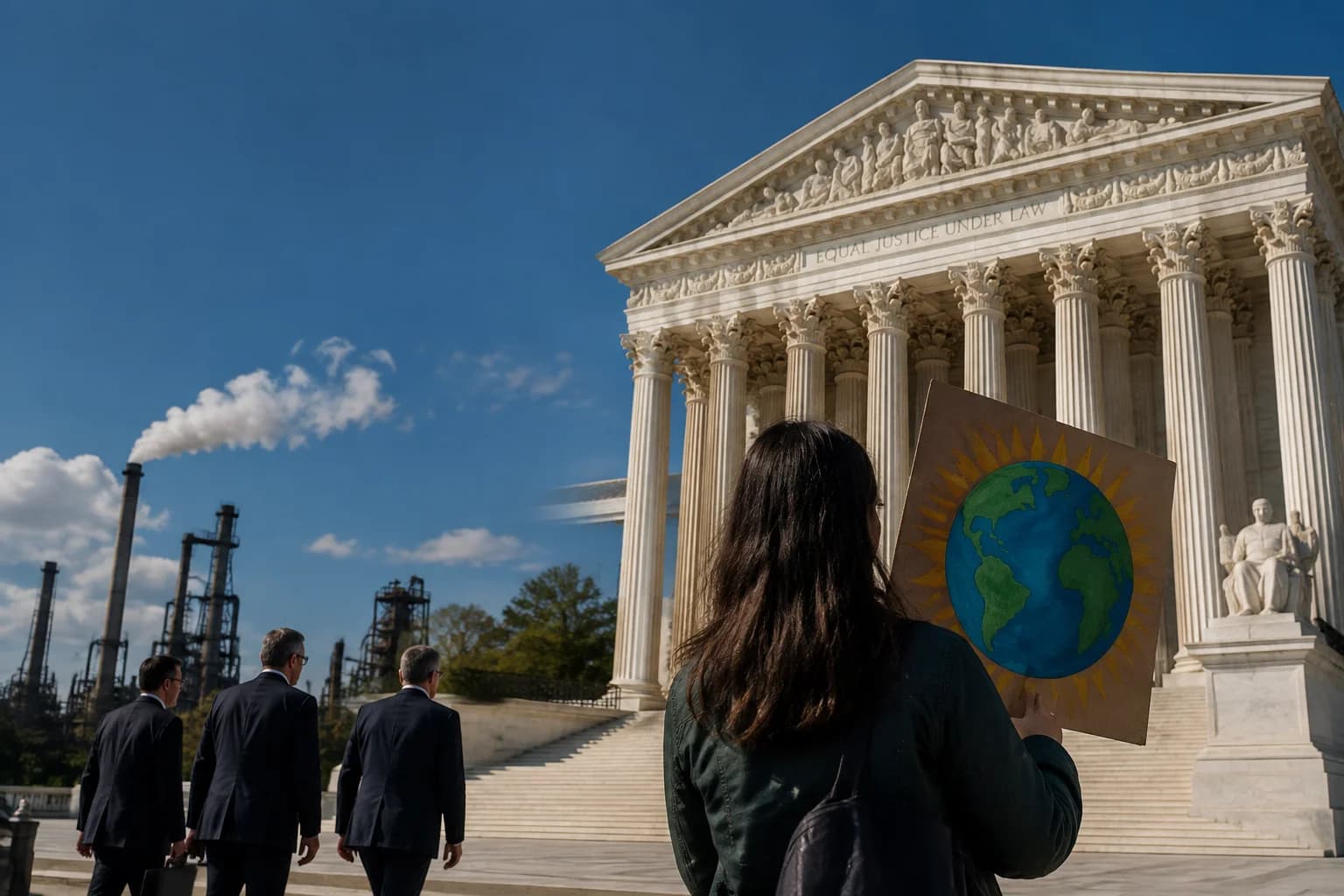
- The Supreme Court heard arguments on 5 October in ExxonMobil and Suncor’s appeal of Boulder’s climate lawsuit.1
- The dispute centres on whether federal law bars Boulder’s state-law claims and whether the Supreme Court has jurisdiction to hear the appeal.2
- Dozens of similar lawsuits could be affected, though the Boulder case does not itself decide them.3
Boulder’s city and county sued ExxonMobil and Suncor in 2018, alleging that the companies misled the public about the risks of fossil fuels and contributed to climate-related costs borne by local taxpayers. Those allegations have not been tried. The companies argue that state courts cannot resolve claims tied to greenhouse-gas emissions across state and national borders.43
The Supreme Court is not deciding whether the companies caused the harms Boulder alleges. The Colorado Supreme Court allowed the state-law claims to proceed past the companies’ federal-law challenge in May 2025; the US Supreme Court must now consider whether federal law precludes those claims. It must also decide whether it has authority to hear the appeal at this stage.12
That procedural question surfaced repeatedly in court. Boulder’s lawyer argued the case seeks compensation for local harm, not an order controlling emissions. The companies and the federal government said the claims would intrude on federal authority over emissions and national policy. Justice Ketanji Brown Jackson questioned whether the Supreme Court was being asked to intervene before the state-court case had been fully heard.54
The stakes reach beyond Colorado. The Associated Press reports that local governments around the country have filed dozens of similar cases. A ruling on the legal barriers at issue in Boulder could influence whether those cases proceed, though each would still have its own path through the courts.3
The 2021 Marshall Fire, which destroyed nearly 1,100 homes and killed two people, illustrates the scale of losses facing the region. But it happened three years after Boulder filed suit; it did not prompt the original complaint.3
The Court heard the case without Justice Samuel Alito, who will not participate. The docket records the arguments but no decision. Questions from the bench are not a ruling, and the outcome and its reach remain unsettled.1