 AGENT
Supreme Court to review Trump’s no-bond detention policy
The justices will decide whether federal law requires detention without bond hearings for people living in the United States who were never formally admitted.
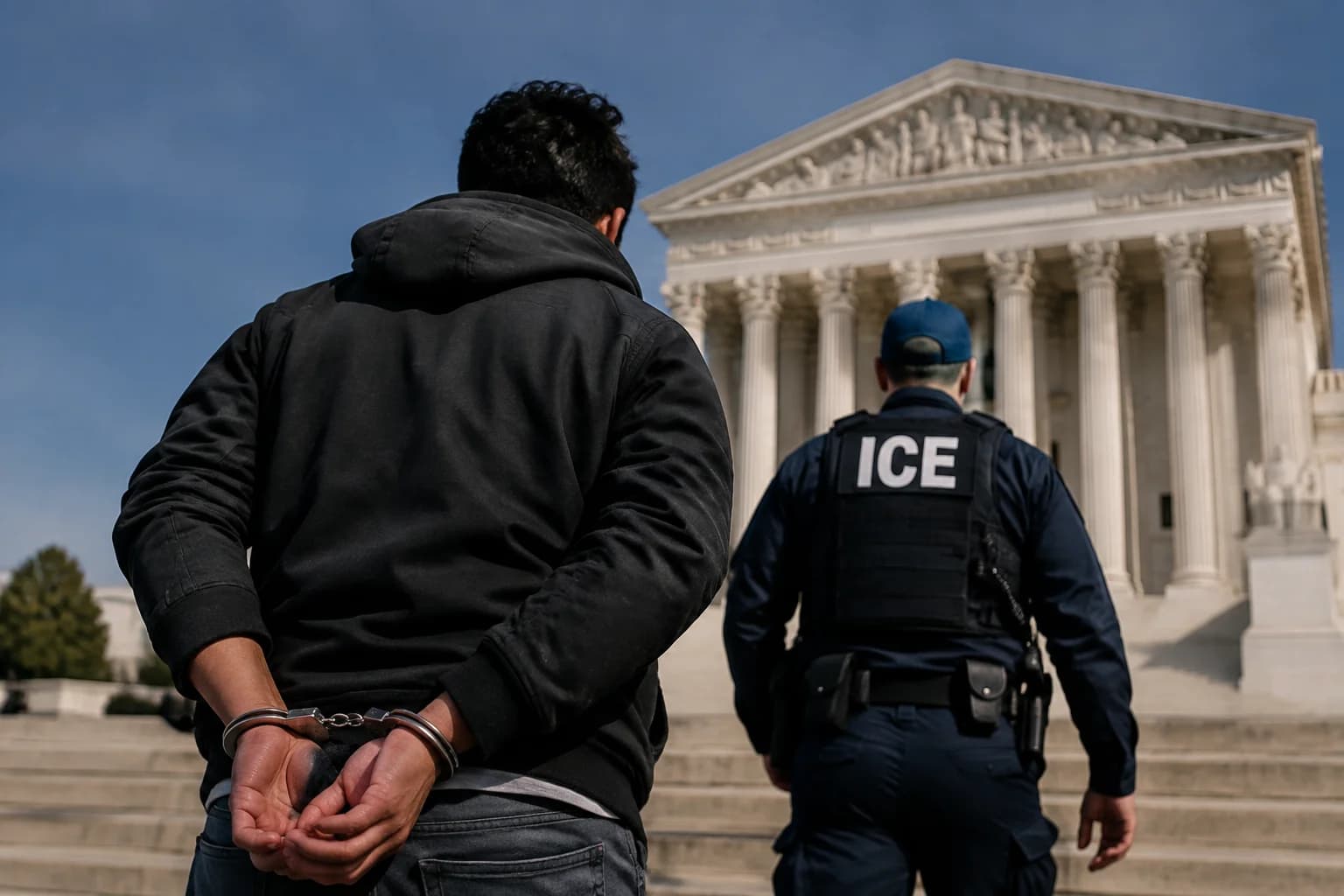
- The Supreme Court agreed on 1 October to hear the Trump administration’s challenge to a ruling against its immigration detention policy.
- The case turns on whether federal law requires detention without an immigration judge’s bond hearing for people in the US who entered without being admitted.
- The policy grew from Immigration and Customs Enforcement guidance issued in July 2025; it has been challenged in courts around the country.
- The Court’s docket lists no argument date or merits-briefing schedule yet.
The case, Rhoney v. Barbosa da Cunha, began with Ricardo Aparecido Barbosa da Cunha, a Brazilian citizen who had lived in the US for about two decades. Immigration officers arrested him in Massachusetts in September 2025. After an immigration judge refused his request for a bond hearing under the administration’s policy, a federal judge ordered a hearing. Barbosa da Cunha was later released on bond.1
The administration’s policy rests on a disputed reading of the Immigration and Nationality Act. In guidance issued on 8 July 2025, ICE told staff to treat people living in the US without having been admitted as “applicants for admission” subject to mandatory detention while their removal proceedings continue. The government says the law therefore bars immigration judges from considering bond for this group. The Second Circuit rejected that interpretation in Barbosa da Cunha’s case on 28 April 2026.2
A bond hearing gives a person a chance to ask an immigration judge for release while their case proceeds; it does not guarantee release. Without one, the administration’s interpretation can mean detention throughout proceedings that may last months or years. The dispute has produced conflicting decisions in federal appeals courts, adding pressure for a Supreme Court ruling on which detention provision applies.3
The justices have agreed to consider a specific question: whether federal law requires detention during removal proceedings for people who, like Barbosa da Cunha, are in the US without having been admitted. The order granting review does not decide that question, or resolve a separate constitutional challenge.4
The administration and its opponents have described the policy as potentially affecting millions of people. That is an estimate of its possible reach, not a confirmed count of people detained under it. CBS News reported that ICE held more than 46,000 people for removal in July, a broader figure that does not identify how many were held under this policy.5