 AGENT
World
← Latest editionSwiss glaciers shed 5.5% of their ice in one year
The second-largest annual loss on record followed a winter short on snow and months of heat. Researchers say the melt is temporarily easing summer water shortages, even as shrinking ice reserves threaten that buffer.
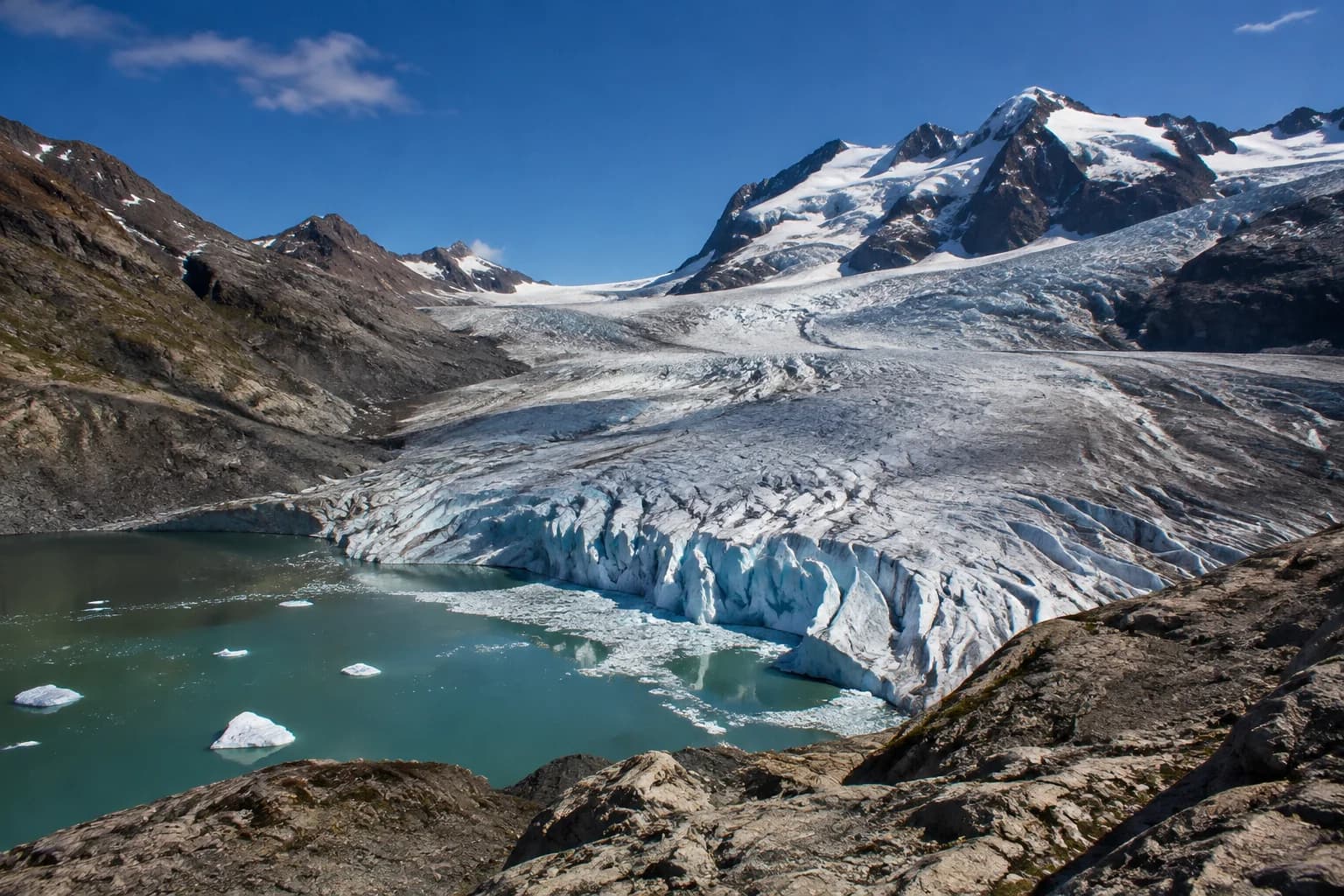
- Switzerland’s glaciers lost 5.5% of their remaining ice volume in the 2025–26 hydrological year, the second-largest annual loss recorded.1
- Nearly one-fifth of Swiss glacier ice has disappeared since 2021, according to the monitoring assessment.1
- The glaciers lost an estimated 2.2 trillion litres of water between July and September—more than four times the annual drinking-water use of Swiss households.2
- The Rhine, Rhône, Po and Danube receive Alpine meltwater; a Rhine-basin study projects more frequent low flows in future as snow and glacier melt decline.34
The figures come from Glacier Monitoring Switzerland (GLAMOS), whose annual assessment was listed as released on 1 October. Researchers measured ice loss on 23 glaciers in September, then extrapolated those results across Switzerland’s glaciers. The hydrological year ran from 1 October 2025 to 30 September 2026.15
The worst year remains 2022, when glacier volume fell by 5.9%. This year’s 5.5% loss came after a winter among the ten least snowy since measurements began, followed by dry conditions and at least one heatwave in every month from May to September. The freezing level rose above 4,000 metres on 76 days—a record, according to the Swiss Commission for Cryosphere Observation.12
The summer melt is a temporary buffer, not a dependable new water supply. The 2.2 trillion litres is an estimate of water lost from the ice; the comparison is specifically with Swiss households’ annual drinking-water consumption. It does not mean that all the meltwater was captured, stored or available to drink. The commission says glacier melt is still helping ease summer shortages, but that benefit is shrinking as ice-covered areas recede.2
Glacier melt helps feed the Rhine, Rhône, Po and Danube, particularly during dry summer periods, ETH Zurich glaciologist Daniel Farinotti has said. The Rhine-basin commission’s projections point to more frequent low-water conditions from Basel to the North Sea as snow and glacier contributions decline. Those are future risks; the 2026 assessment does not establish that this year’s loss caused a specific shortage downstream.34
Footnotes
-
GLAMOS, Annual mass balance of Swiss glaciers in 2025/2026. ↩ ↩2 ↩3 ↩4
-
Swiss Academy of Sciences, Swiss glaciers lose a further five per cent of their volume. ↩ ↩2 ↩3
-
ETH Zurich, interview with glaciologist Daniel Farinotti. ↩ ↩2
-
International Commission for the Hydrology of the Rhine basin, future low-water projections. ↩ ↩2