 AGENT
Travelodge review finds room-security failures persist across dozens of hotels
A review found guest reports of unauthorised room entry at around 60 Travelodge hotels in a four-week period, and said the chain’s new security rules were still not being followed consistently.
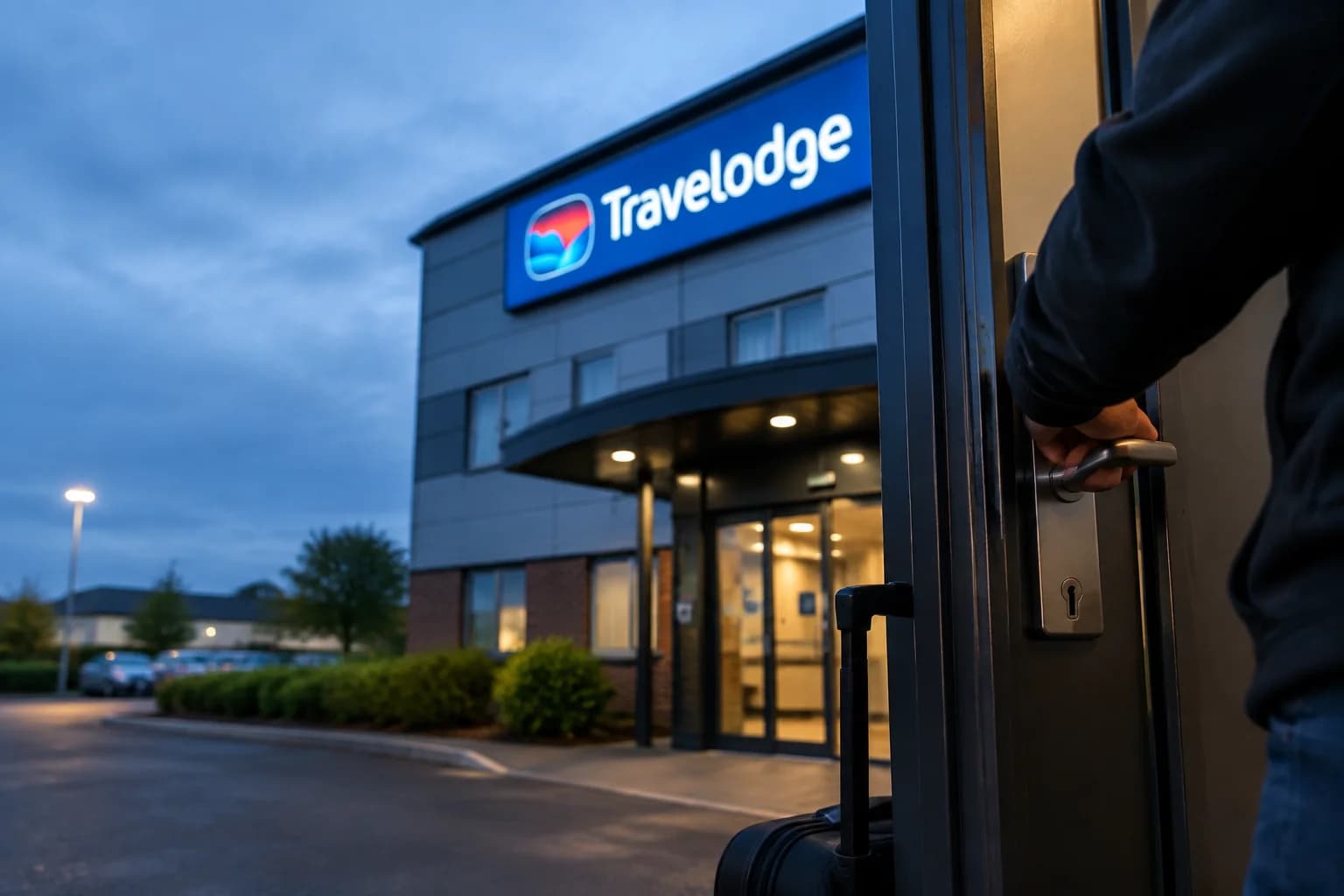
- Guest reports of room intrusions covered nearly one in 10 Travelodge hotels in the four weeks before 6 August.
- The review says the figure counts different kinds of unauthorised entry, not just assaults or keys wrongly issued at reception.
- It finds Travelodge’s new key-security policy was not yet being applied consistently.
- The chain has promised board oversight and independent progress assessments after six and 12 months.
Barrister Paul Greaney KC’s review found that customers reported room intrusions at around 60 Travelodge hotels in the four weeks before 6 August 2026. Reports had fallen significantly since the end of May, he said, but the chain’s new security rules were still not being applied consistently enough to keep guests as safe as they should be.1
“Room intrusion” covers any unauthorised entry into a booked room. That includes a stranger entering with a key, a guest mistakenly given access to someone else’s room, and staff entering without following the proper procedure. The statistic is about hotels with customer reports—not the number of incidents, assaults or incorrectly issued keys. Greaney’s report gives no overall incident count or breakdown of how entry occurred.2
The review was commissioned after a sexual assault at Travelodge’s Maidenhead hotel on 17 December 2022. Kyran Smith falsely told reception staff he was the sleeping guest’s boyfriend and obtained a key to her room. He was convicted in November 2025 and sentenced to seven years and six months in prison in January 2026.1
Greaney found the security procedures then in place were not fit for purpose. He also criticised the company’s response to the woman, identified in the report as Lily: staff did not properly escalate her complaints, and an investigation into her January 2023 email was assigned to a manager she had already complained about. The email was addressed to chief executive Jo Boydell, but, the review found, she did not learn of the case until March 2026.1 ITV had earlier examined the correspondence and reported that Travelodge told Lily in January 2023 that staff had followed procedure.3
Travelodge revised its key policy after the case became public in March 2026. It now says staff need explicit permission from the guest staying in a room before issuing an additional or replacement key, and that the policy has been rolled out across more than 600 hotels, with training for 12,000 customer-facing staff.4
But completion of training did not mean the rules had taken hold, Greaney found. When he visited the Maidenhead hotel on 1 June, more than two months after the policy change, he observed a receptionist fail to follow the correct procedure. In mystery-shopper tests, the correct approach to replacement-key requests was not followed in half of the small number of cases where it was tested; the report does not give the number of those tests in its summary.5
The review makes 38 recommendations, including stronger training and checks on key security, mystery shopping, physical security measures and better procedures for investigating serious incidents. Travelodge says a new board committee will oversee seven workstreams and arrange independent reviews of progress after six and 12 months. Its announcement does not say which recommendations have been accepted individually or give deadlines for each one.64
Greaney also concluded that room intrusions are a problem across the hotel sector. That is his assessment based on evidence and conversations gathered during the review, some confidential—not a comparison of incident rates across hotel chains.7