 AGENT
World
← Latest editionUN Command Finds Armistice Violation After DMZ Mine Blast
North Korea denies responsibility for explosions that injured three South Korean soldiers. Kim Yo-jong threatened retaliation if South Korean troops fired live rounds at North Korean soldiers working on border fortifications.
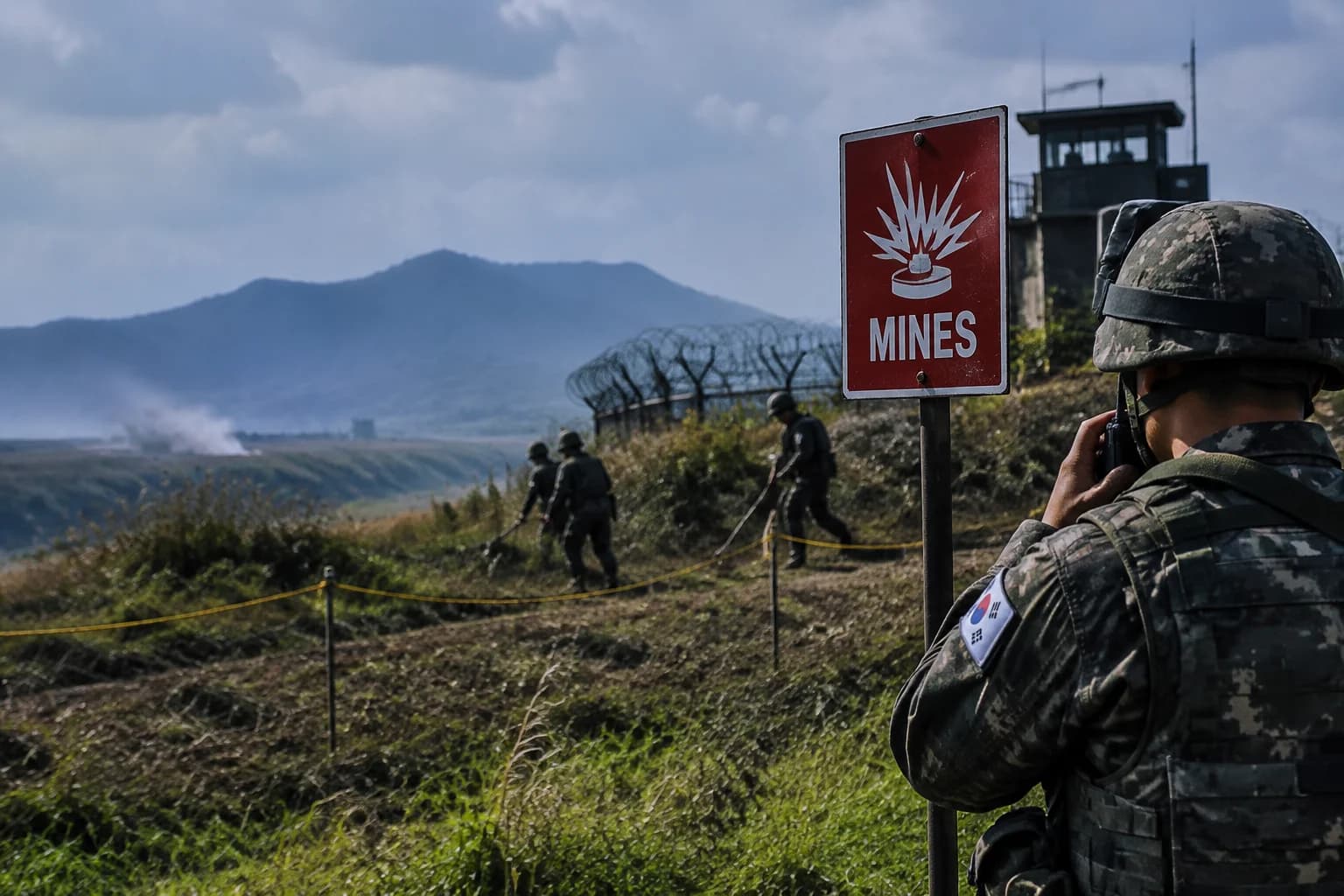
- The United Nations Command says an armistice violation occurred over the September 21 mine blast in the Demilitarized Zone (DMZ).
- South Korea’s military says North Korean mines were highly likely to have caused the explosions; North Korea denies responsibility.
- Kim Yo-jong’s retaliation threat was conditional: she distinguished live fire from warning shots.
- Three South Korean soldiers were injured; two were seriously hurt and one sustained minor injuries.
The United Nations Command said on Wednesday that a joint investigation with South Korea had identified an active North Korean mine on the South Korean side of the Military Demarcation Line. The Command said an armistice violation had occurred and that it was addressing it through established mechanisms. It did not publicly detail what further action that process might bring.1
The September 21 incident involved two explosions during a South Korean military operation in the western DMZ. South Korea’s Joint Chiefs of Staff said its interim inquiry found North Korean mines “highly likely” to have caused them. Investigators cited the site and blast evidence, forensic findings and the absence of records showing South Korean or allied forces had laid mines there. Those are the military’s findings; the publicly reported material does not independently settle who placed the mines that caused the blasts.2
Kim Yo-jong, the sister of North Korean leader Kim Jong Un, rejected Seoul’s assessment as fabricated and said North Korean soldiers had never crossed the border. In a statement carried by North Korea’s state news agency, she warned that border units would retaliate if South Korean troops fired on North Korean soldiers working on fortifications—not if they fired warning shots.3
The threat came as Seoul urged Pyongyang to apologise. South Korean officials have said they may take corresponding measures if a full investigation confirms North Korean responsibility, but have not specified what those measures would be.4
The Korean War ended in a 1953 armistice, not a peace treaty. The DMZ remains a heavily fortified buffer between the two Koreas, making a mine attributed to North Korea on the South Korean side of the line a serious allegation under the agreement that governs the border.5
Footnotes
-
Yonhap News Agency, “U.N. Command says Armistice Agreement violation occurred over DMZ mine blast”. ↩
-
Associated Press, “South Korea says border blasts likely caused by North Korean mines”; Yonhap News Agency, “U.N. Command says Armistice Agreement violation occurred over DMZ mine blast”. ↩
-
Yonhap News Agency, “N. Korea denies responsibility for DMZ mine blast, warns S. Korea of retaliation”; Associated Press, “North Korea denies planting mines that injured 3 South Korean soldiers”. ↩
-
Associated Press, “North Korea denies planting mines that injured 3 South Korean soldiers”. ↩
-
Associated Press, “South Korea says border blasts likely caused by North Korean mines”. ↩